Anúncios
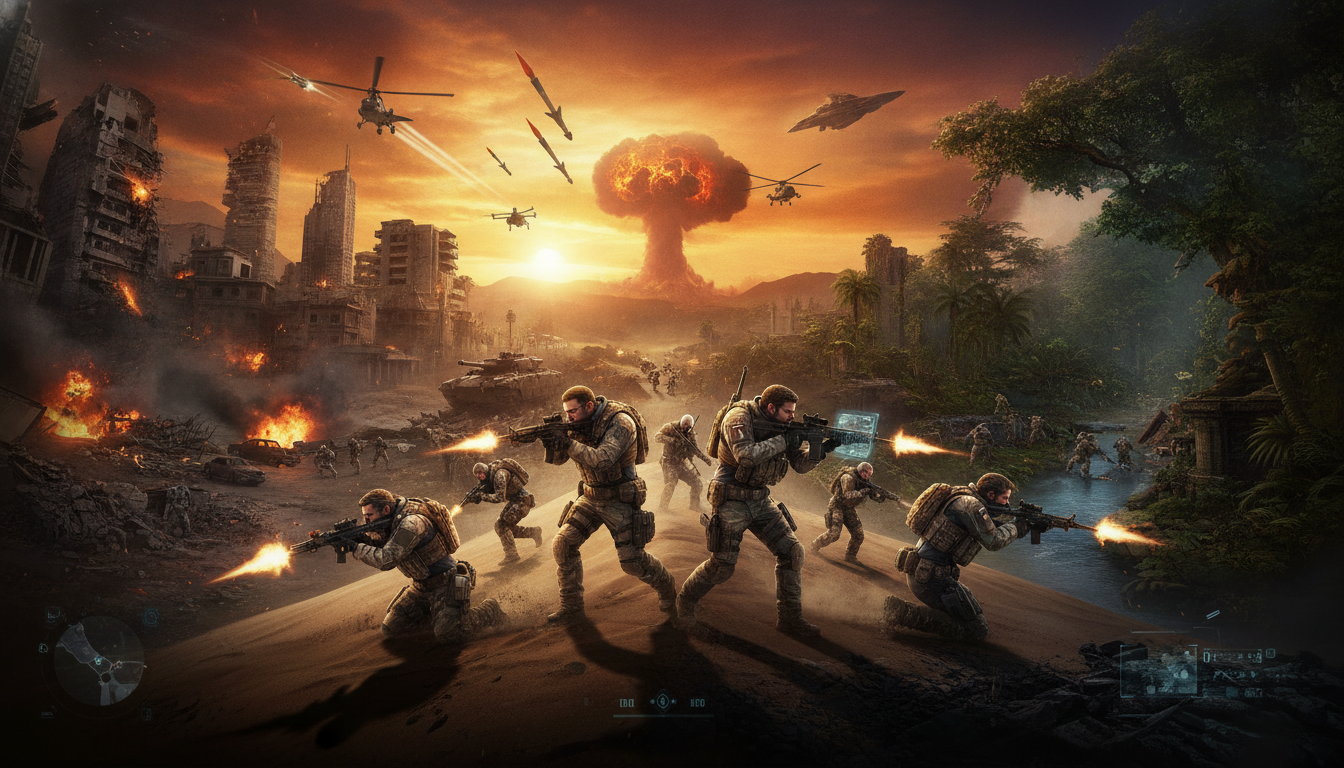
What began as a bold gamble evolved into a cultural phenomenon spanning generations of players around the world.
The franchise’s journey is marked by constant innovation and moments that defined the action genre. From the earliest virtual battlefields, Call of Duty has sought to deliver an immersive experience that places the player at the heart of epic conflicts.
Anúncios
Today, we will explore the history of the Call of Duty series.
Technical evolution and the transition to the modern era

Call of Duty®: Mobile
You will be redirected to another website
Anúncios
Call of Duty®: Mobile
The Call of Duty franchise has undergone significant transformations that defined the shooter genre. Infinity Ward played a pivotal role by consistently raising the bar for visual quality and gameplay fluidity.
This relentless pursuit of improvement allowed the series to remain relevant in a highly competitive market.
Technical evolution was the driving force behind each new release, ensuring increasingly immersive experiences for players.
The innovation of Call of Duty 2
With the release of Call of Duty 2, the series made a technological leap that was impressive for its time. The graphics engine was enhanced to deliver smoke effects, dynamic lighting, and far more detailed battlefield textures.
Gameplay became more fluid, allowing for intense and realistic combat. This title cemented the developer’s reputation for creating environments that felt both alive and dangerous.
Some of the key innovations introduced during this phase included:
- Significant improvements to enemy AI.
- Implementation of more dynamic health regeneration systems.
- Creation of environments with greater scale and visual destruction.
- Audio enhancements to increase sound immersion.
The paradigm shift with Modern Warfare
The transition to contemporary warfare marked a crucial paradigm shift for the franchise. By moving away from historical settings, Modern Warfare introduced a fresh perspective that revitalized global audience interest.
This shift enabled the exploration of advanced military technologies and more complex narratives. The success of this transition demonstrated that the series possessed the versatility to reinvent itself without losing its essence of frenetic action.
Exploring different conflicts and narratives
Over the years, the Call of Duty narrative evolved from a mere backdrop into the heart of the experience.
The franchise realized that maintaining engagement required offering more than just gunfights; it needed to invest in storylines that challenged players emotionally.
This shift in focus allowed developers to explore new theaters of war with unprecedented depth. By varying the settings, the series managed to retain the freshness needed to appeal to different generations of fans.
World at War and the return to the Pacific
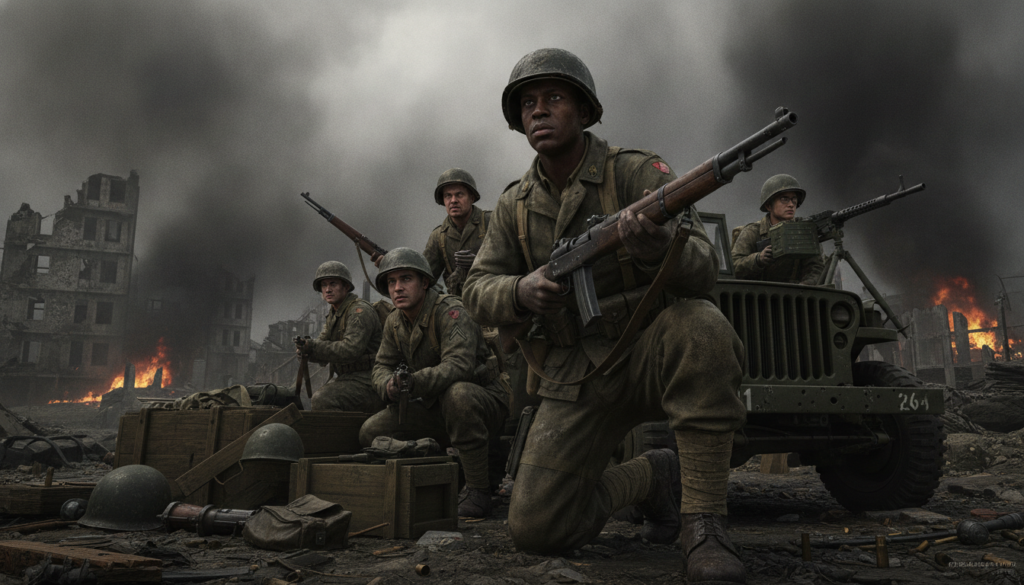
The title World at War marked a significant turning point by presenting a much grittier, more visceral take on World War II.
By focusing on the Pacific theater, the game moved away from the traditional heroic tone to reveal the dark, desperate nature of combat.
This approach delivered an authenticity that resonated deeply with audiences. A narrative centered on survival in hostile environments made the gameplay experience far more immersive and memorable.
The political complexity of the Black Ops series
With the arrival of the Black Ops series, the franchise fully immersed itself in plots involving conspiracy and mystery. The focus shifted to covert operations, where the line between right and wrong becomes incredibly blurred.
Players were challenged to question the game’s reality, grappling with themes such as brainwashing and international espionage. This narrative complexity raised the bar for what is expected of a modern shooter.
- In-depth development of iconic characters.
- Exploration of moral dilemmas in wartime.
- Use of surprising plot twists.
- Integration of historical facts with compelling fiction.
The rise of competitive multiplayer
The Call of Duty online experience has evolved from simple matches into a global social phenomenon. Multiplayer mode transformed the franchise, offering players an environment where dedication is constantly rewarded.
This shift in focus allowed the series to stand out in an increasingly saturated market. By offering fluid and rewarding gameplay, the title won over millions of fans seeking constant challenges against other users.
The progression system and perks
The success of the multiplayer mode lies in the depth of its progression system. Players do not merely compete for victories; they also unlock new equipment and abilities that alter their playstyle.
The introduction of perks and customization options allowed each user to create a unique identity on the battlefield. Key elements that defined this experience include:
- Patent systems that reward playtime.
- Detailed weapon and accessory customization.
- Tactical perks that modify speed and stamina.
- Daily challenges that maintain constant engagement.
Creating an eSports Culture
As online mechanics matured, a high-level competitive scene naturally emerged. The professionalization of the game elevated the status of Call of Duty, transforming casual matches into global eSports events.
Professional organizations and players began dedicating hours of training to mastering every map and strategy, not only validating the game as a legitimate sport but also fostering a loyal fanbase that follows international tournaments with great enthusiasm.
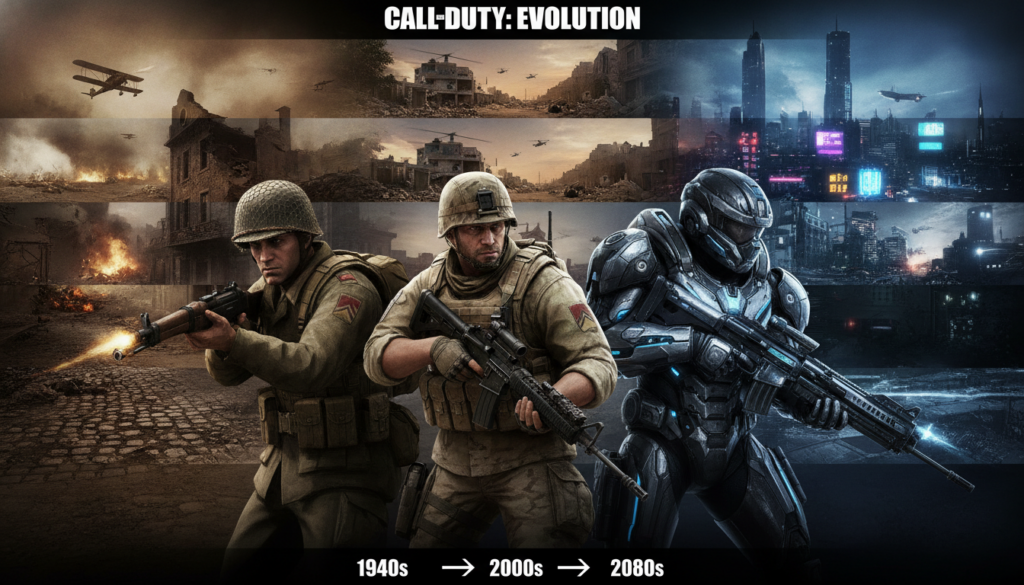
A detailed analysis of the series’ history across the decades
The trajectory of Call of Duty is marked by constant shifts in creative direction. Over the years, the franchise has sought to balance technological innovation with players’ desire for experiences that feel authentic and engaging.
This constant adaptation has allowed the series to remain relevant in a highly competitive market.
The transition between different gameplay styles reflects how developers listened to community feedback while exploring new narrative possibilities.
The shift to futuristic combat
At one point, the series decided to explore distant technological horizons. The focus on futuristic combat introduced novel mechanics—such as boost jumps, energy weapons, and special abilities—that altered the pace of matches.
These innovations aimed to attract an audience seeking faster, more vertical gameplay. Although it was a bold phase, it divided opinion, demonstrating that innovation does not always align with the nostalgic preferences of long-time fans.
Returning to its roots and tactical realism
After its forays into sci-fi settings, the franchise recognized the need to change course.
Returning to its roots brought a renewed focus on tactical realism, prioritizing more measured combat and settings that evoke credible historical or modern conflicts.
This shift was crucial for reconnecting the brand with its original essence. Players once again came to value the precision, strategic positioning, and immersive sound design that define Call of Duty’s success today.
- Exploration of jetpacks and advanced mobility.
- Focus on military sci-fi narratives.
- Adoption of heavier, more realistic weapon systems.
- Emphasis on map design centered on tactics.
Conclusion

The trajectory of Call of Duty reveals an impressive capacity for adaptation and constant innovation. The series has shaped the first-person shooter genre and set technical standards that elevate the experience for millions of players worldwide.
Each title released by Activision reinforces a commitment to visual quality and narrative immersion. The franchise has transformed digital entertainment by creating a global community united by a passion for its virtual battlefields.
The continued success of the studios involved ensures that new generations of fans will keep exploring these complex universes for a long time to come.