Anúncios
Have you ever wondered how a simple candy-matching game managed to captivate millions of people around the world for over a decade? Candy Crush transformed the way we interact with mobile devices, becoming a true cultural phenomenon.
The story behind this title is fascinating and reveals key insights into digital entertainment design. Over the years, the game’s constant evolution has kept it fresh and challenging for both new and returning players.
Anúncios
Today, we’ll explore the factors that ensure the longevity of this experience.
The addictive mechanics behind the success
Candy Crush Saga
You will be redirected to another website.
Anúncios
Candy Crush Saga
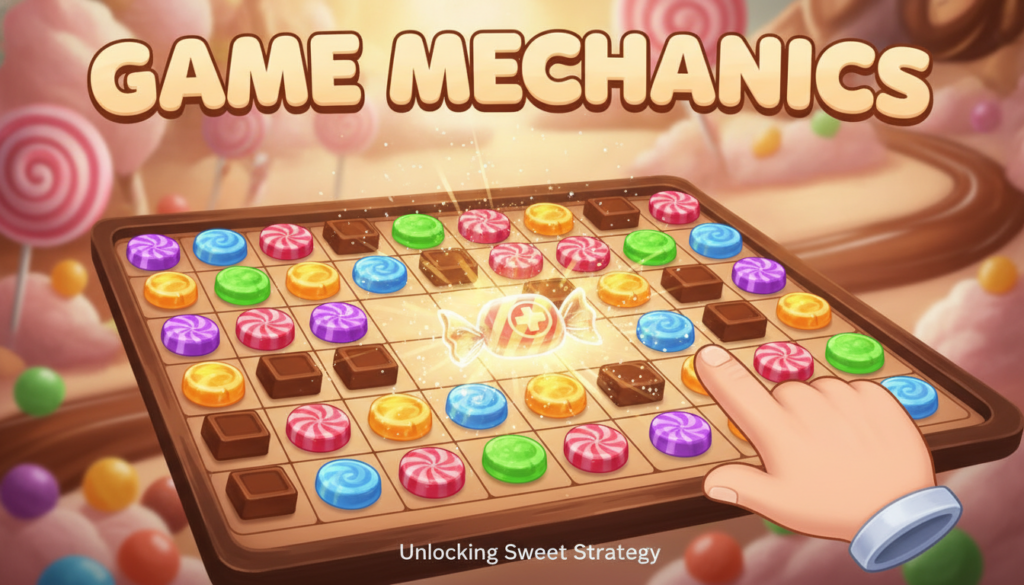
At the core of the entertainment lies a finely tuned game mechanic.
By streamlining interaction, the developers created a system that anyone can learn in seconds, yet one that requires strategy to master.
The match-three concept
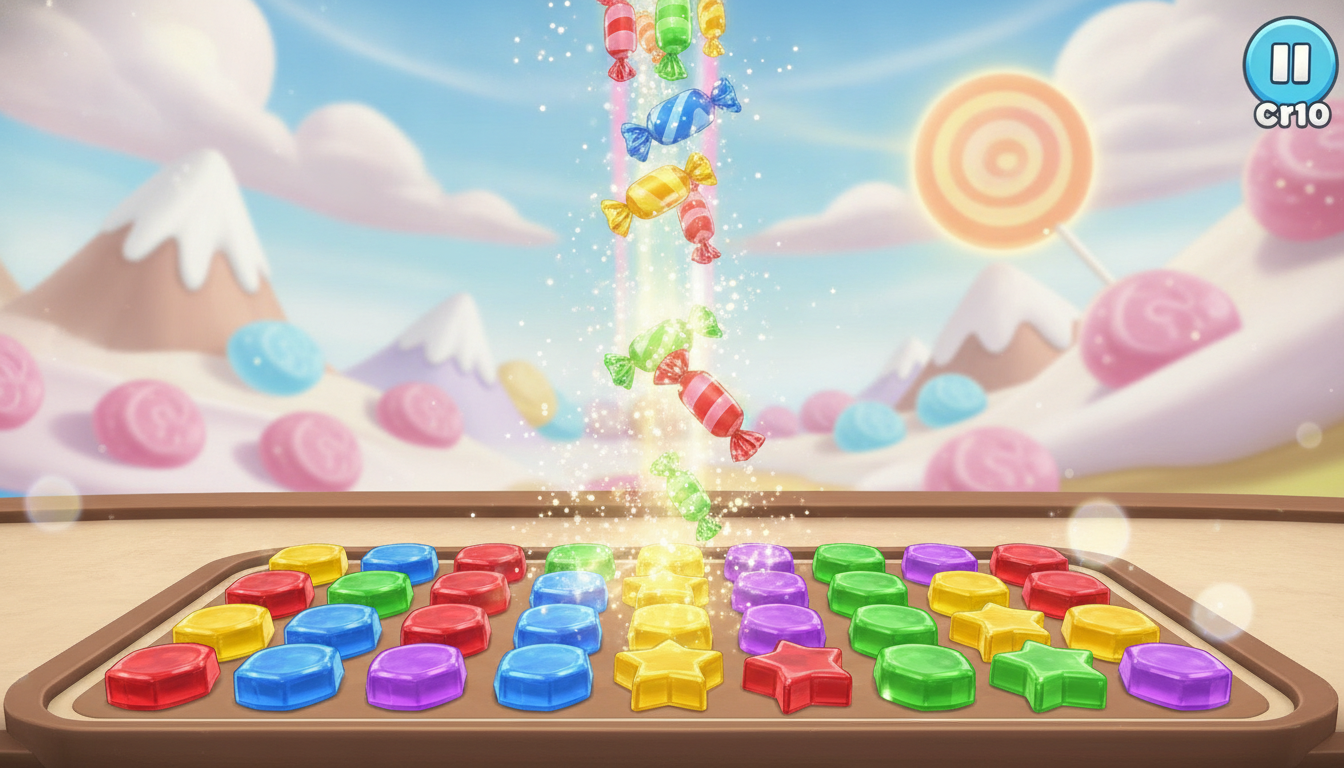
The heart of the experience lies in the simplicity of aligning three identical elements. When a player successfully forms these matches, the game responds with vibrant visual effects and satisfying sounds that encourage them to keep playing.
- Immediate visual feedback after every combination.
- A sense of constant progress with every move.
- Easy for new players to learn.
The importance of the difficulty curve
Maintaining player interest across thousands of levels requires careful planning. The difficulty curve is adjusted so that the challenge increases gradually, preventing the user from feeling frustrated or bored.
This balance is the secret to keeping the game mechanics engaging even after hundreds of attempts. The system presents obstacles in just the right measure, ensuring that every victory feels like a well-deserved personal achievement.
The transition from browser to mobile
Candy Crush’s resounding success owes much to its strategic transition to the mobile environment. What began as a social media craze quickly found a new home on smartphones, changing how the public interacts with digital entertainment.
This shift was not merely technical; it was a move that redefined the mobile gaming market. By migrating to smaller screens, the title managed to reach millions of people looking for quick, everyday entertainment.
Adapting the interface for touchscreens
The transition required special attention to the user interface. The challenge lay in transforming mouse clicks into natural touch gestures while ensuring no precision was lost in the process.
Developers focused on making every movement fluid and satisfying. With simple touches, players can easily slide pieces, creating a tactile experience that makes Candy Crush extremely intuitive for anyone.
The role of portability in growth
Portability was the key factor that cemented Candy Crush as a global phenomenon. The ability to carry the challenge in one’s pocket allowed the game to integrate seamlessly into users’ daily routines.
Several factors explain why this freedom of movement drove such high levels of engagement:
- Quick access while waiting in line.
- Ability to play during short breaks.
- Easy synchronization across different devices.
- Consistent experience anywhere.

The evolution of visual and audio design
The magic behind this game lies in a perfect combination of visual and auditory stimuli. Meticulous visual design and a distinctive audio identity work together to create an immersive experience that captivates players around the world.
Colorful aesthetics and visual appeal
The game’s visual appeal is a cornerstone of player retention. Vibrant colors and candy shapes create a playful atmosphere that invites users to explore each level with enthusiasm.
This aesthetic choice is not merely decorative; it serves to guide the player’s gaze during gameplay. By utilizing saturated tones and rounded shapes, the visual design makes the interface user-friendly and highly attractive.
An iconic audio identity
Beyond the colors, the iconic audio identity plays a vital role in the player’s emotional response. Every move made on the board is accompanied by sound effects that reinforce the satisfaction of a successful play.
These sounds create a positive feedback loop that makes the game mechanics far more rewarding. When sensory elements align, the player experiences immediate gratification, encouraging them to keep progressing through the levels.
Monetization strategies and the freemium model
Have you ever wondered how a free game manages to remain so profitable over the years?
The answer lies in a smart business model that prioritizes the user experience while offering optional purchase opportunities. This allows millions of people to enjoy the challenge without spending a dime, keeping the game accessible to everyone.
The freemium system is the backbone of this structure; it ensures that progress is achievable through skill while offering shortcuts for those who wish to advance quickly or overcome particularly difficult obstacles.
Balancing free gameplay with in-app purchases
Effective monetization occurs when players feel that purchases are a choice rather than an obligation. The game is designed so that the free content is extensive and satisfying in its own right.
When a player decides to invest, they generally seek convenience or a strategic advantage. To maintain this balance, the developer focuses on offering items that add real value to the journey, such as:
- Extra lives to keep playing without interruption.
- Additional moves to complete challenging levels.
- Powerful boosters that clear large areas of the board.
- Special item packs for limited-time events.
The psychology of lives and boosters
Limiting lives creates a sense of urgency and scarcity that is fundamental to engagement. When lives run out, the player faces a choice: wait for the recharge time or make a small purchase to continue the fun immediately.
This monetization dynamic leverages psychological triggers that place value on the user’s time. Similarly, the strategic use of boosters transforms moments of frustration into rewarding victories.
By offering these tools, the freemium model turns difficulty into an opportunity for triumph. The player feels that, with the right help, no level is impossible to beat.
The Psychology of Engagement and Infinite Levels
Player psychology is the invisible engine that keeps interest alive for years. When analyzing how people interact with digital games, we realize that success depends not just on beautiful graphics, but on how the brain processes every small victory.
Smart design creates a constant feedback loop, ensuring the user feels genuine satisfaction when overcoming challenges, even those that seem simple at first glance.
The Reward and Dopamine System
Every time you match three identical pieces, the game triggers a positive response in your brain. This reward mechanism relies on the release of dopamine, a neurotransmitter associated with pleasure and motivation.
Visual effects—such as colorful explosions and vibrant sounds—act as immediate reinforcement. This instant gratification makes the brain want to repeat the action, fostering deep, lasting engagement.
It is not just about winning, but about feeling that every move has a purpose. The sense of progress is carefully calibrated so that the player feels capable and rewarded at every stage.
Maintaining Interest Across Thousands of Levels
Keeping the audience engaged through thousands of levels is a massive technical and creative challenge. Developers employ a difficulty curve that alternates between moments of tension and periods of relaxation.
This variation prevents mental fatigue and keeps the player curious about what comes next. The gradual introduction of new obstacles ensures the experience never becomes monotonous or overly predictable.
Furthermore, the game’s structure allows users to pick up their journey right where they left off. This flexibility is essential for maintaining high engagement, regardless of how much time is available for playing.
- Progressive level design.
- Introduction of new visual challenges.
- Balance between difficulty and reward.
- Pacing adapted to user behavior.
Conclusion
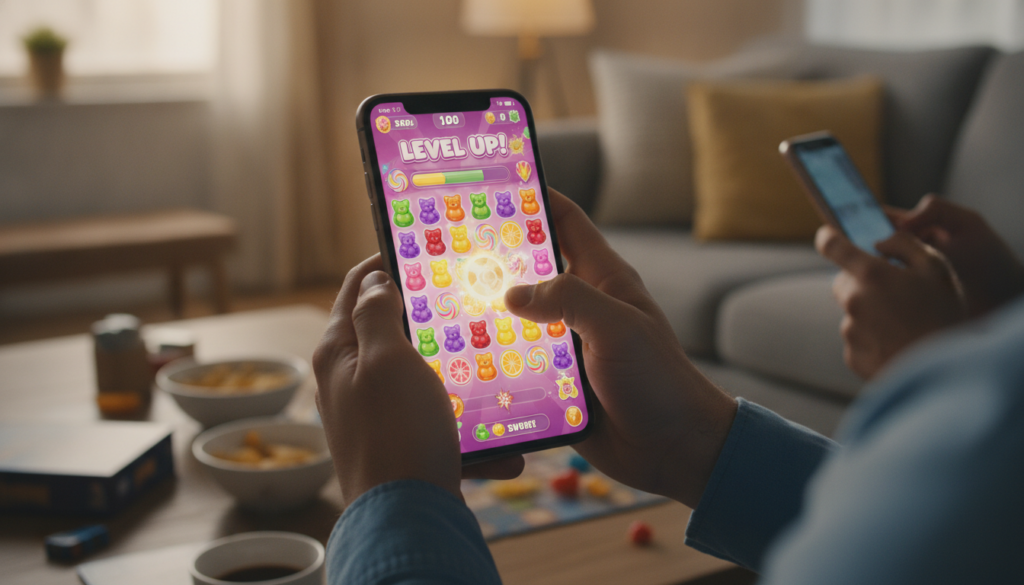
The trajectory of Candy Crush reveals how adaptability defines enduring success in the digital market. King transformed a simple candy-matching mechanic into a cultural phenomenon that spans generations.
We have recapped key points, ranging from the intuitive interface to the complex engagement psychology that keeps players active. The game proves that constant innovation is the secret to transforming a pastime into a global brand.
The balance between technical challenges and visual design ensures the experience remains fresh. The franchise’s longevity demonstrates that listening to the community and evolving alongside technology are vital steps for any developer.