Anúncios
Have you ever stopped to wonder why a simple digital simulator managed to evoke such genuine feelings in millions of players around the world?
Nintendogs was not merely a commercial success but a milestone in gaming history, transforming the routine of pet care into a journey of affection and daily responsibility.
Anúncios
Today, we look back at how this title captured hearts and set a new standard for the simulation genre.
The launch of Nintendogs and the context of the Nintendo DS
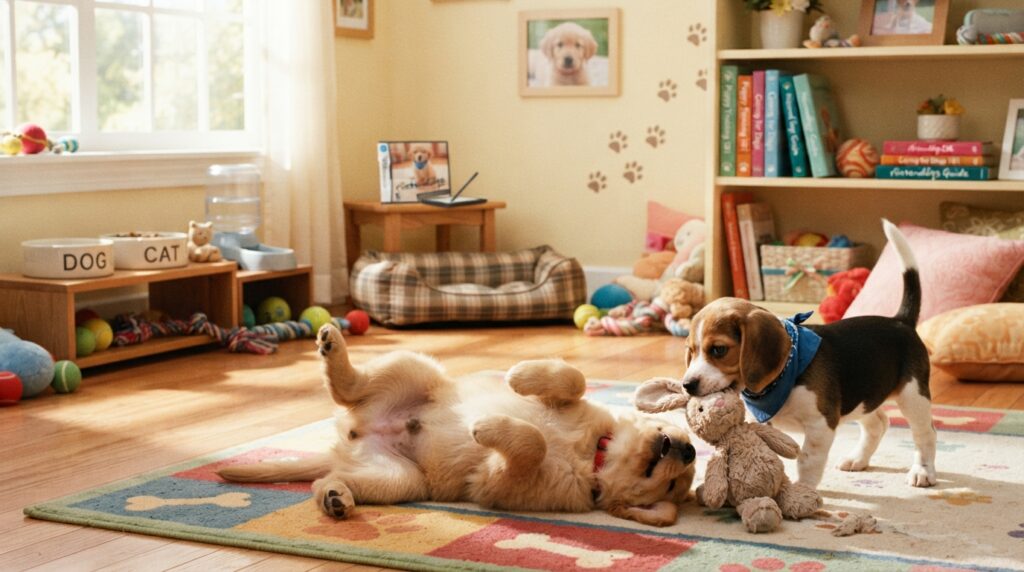
The launch of Nintendogs marked a fundamental shift in how we interact with handheld consoles. Upon its release, the Nintendo DS introduced an innovative concept that transformed the gaming experience into something far more tactile and personal.
Anúncios
The dual-screen setup and intuitive interface enabled developers to create a direct bridge between the player and the virtual pet. This technology laid the foundation for pet care to become an engaging and realistic activity.
The intersection of touchscreens and casual gaming
The introduction of the touchscreen was the key factor that fueled the rise of casual gaming. Instead of relying solely on complex button inputs, players could pet, feed, and play with their virtual companion using only the stylus.
This simplicity eliminated technical barriers that had previously alienated people less accustomed to traditional controls.
The result was a user-friendly interface where direct interaction with the screen fostered an immediate sense of emotional connection with the animal.
The Nintendogs versions: Nintendogs, Nintendogs: Chihuahua & Friends, and Nintendogs: Best Friends
To cater to diverse preferences, Nintendo released the title in multiple versions, each featuring different starting breeds. Players could choose from:
- Nintendogs: Chihuahua & Friends
- Nintendogs: Best Friends
- Original version featuring breeds such as the Labrador Retriever
How the game broadened the video game audience
Nintendogs played a crucial role in attracting an audience that rarely took an interest in consoles. By focusing on a relaxing experience free from the pressure of overcoming complex challenges, the game won over people of all ages.
The concept proved that casual games could be just as deep and rewarding as action titles. Consequently, the Nintendo DS established itself as an inclusive platform, expanding the reach of video games into new households around the world.
Choosing your first dog and building a special bond
Few moments in gaming are as memorable as that first encounter with your pet in Nintendogs.
This initial choice wasn’t merely aesthetic; it was the starting point for a journey of digital companionship that would shape your entire progression.
Available breeds and personality differences
The selection of breeds offered options for every taste, ranging from small companion dogs to more active breeds. Each animal displayed unique personality traits that influenced how they reacted to your interactions.
Some were playful and energetic, while others showed a calmer, more reserved temperament. Observing these nuances right at the kennel was therefore essential to finding a partner that matched your playstyle.
The impact of the name, voice, and command recognition
After selecting your favorite, the naming process made the experience deeply personal. Giving your pet a name forged an immediate bond that extended beyond the screen.
Voice recognition technology allowed the animal to learn to respond to your specific call, transforming the pet-care game into a much more realistic experience—as the dog truly seemed to hear and understand its owner.
Why the choice of the first pet stays with you
For many players, choosing that first companion in Nintendogs remains a cherished, nostalgic memory. These virtual dogs were not merely pixels, but beings that required daily attention and affection.
This initial connection fostered a sense of responsibility that made every interaction special.
Even years later, players often remember the breed and name of the first pet they adopted in this dog-care game.
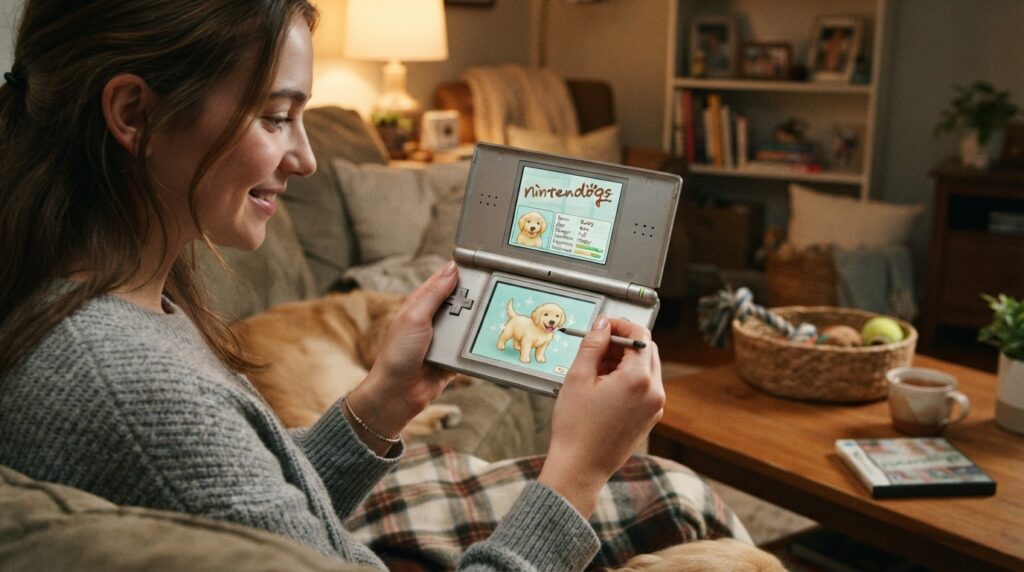
The daily activities that brought the game’s routine to life
The secret to Nintendogs lay in how daily tasks forged a real bond between the player and their virtual companion.
When you opened the console, you didn’t just find software; you found a living being that relied on your constant attention to thrive.
Feeding, bathing, and grooming
Maintaining hygiene and nutrition was the first step toward a happy animal. The game required you to select the ideal food and ensure the bowl was always full.
Beyond food, bathing and grooming were essential for keeping the coat shiny. These simple actions, performed using the console’s stylus, simulated physical touch and reinforced pet care in a highly intuitive way.
Affection, walks, and rest
After hygiene tasks, affection was the central pillar of your relationship. That’s why taking the time to pet your dog after a long day of exploration was one of the most rewarding parts of the pet-care routine.
Walks also held a special place, allowing the animal to burn off energy and discover new locations.
After so much activity, seeing your companion resting peacefully on the screen brought a sense of peace and a job well done.
How repetitive tasks became rewarding
Performing the same actions every day might seem monotonous, but in Nintendogs, repetition was what built intimacy.
Every grooming session or meal served reinforced the idea that you were responsible for that animal’s well-being.
This care structure transformed the game into a therapeutic experience.
Players felt that by caring for their pets, they were cultivating a friendship that evolved with every interaction, turning even the smallest task into a moment of genuine connection.
Training, tricks, and the sense of progress
Dog training in Nintendogs transformed the way we interact with virtual pets. By dedicating time to teaching new behaviors, players discovered that each animal possessed a unique personality and its own pace of learning.
Teaching commands via voice and the Nintendo DS stylus
Nintendo DS technology enabled unprecedented immersion through voice recognition. By repeating specific words, players forged a direct bond, teaching their pets to associate sounds with actions like sitting, lying down, or jumping.
Beyond voice commands, the stylus was essential for reinforcing learning.
Using precise on-screen gestures, players could guide their animals through various tricks, ensuring the pets understood exactly what was expected at each stage.
Obedience, disc, and agility competitions
The effort put into training soon found a clear purpose in competitions. Participating in obedience trials, disc-throwing contests, and agility courses tested the rapport between the owner and their virtual companion.
These events were about more than just winning prizes or leveling up; they served as a stage where all the previous training was put to the test, celebrating the duo’s ongoing growth.
The challenge of progressing without turning care into a chore
Maintaining player interest required a delicate balance between challenge and fun. Nintendogs avoided excessive pressure, allowing progress to unfold naturally and enjoyably, without making tasks feel like forced labor.
The key lay in turning every training session into a leisure activity.
In this way, voice recognition and practicing new tricks became rewarding experiences, keeping the game lighthearted and consistently engaging for those simply seeking the company of a faithful friend.
The outings, the encounters, and the small, unexpected events.
The dog-walking routine added a fascinating layer of discovery to daily life, allowing the player to step out of the home environment and explore a world full of surprises.
It was the perfect opportunity to strengthen the bond with the animal while venturing through virtual streets.
Exploring paths and finding items
During walks, the player could choose different routes to follow. At every turn, one might find gifts left along the way, such as accessories, toys, or collectibles.
This exploration mechanic encouraged curiosity and turned every outing into a mini treasure hunt.
Interactions with other dogs during walks
One of the highlights of Nintendogs was the chance to encounter other owners and their pets along the route. These chance meetings allowed the animals to interact, sniff one another, and even play together for a few moments.
These social interactions fostered a sense of community and realism that greatly enriched the gameplay experience.
How unpredictable details made every session unique
Unpredictability kept the player’s interest constantly renewed. You never knew if your dog would find a rare item or run into a friendly neighbor on the sidewalk.
These small, unexpected events ensured the routine never became monotonous, turning every walk into a new story to tell.
Conclusion

Nintendogs transformed the way we interact with handheld consoles by bringing responsibility and affection to the palm of our hands. This virtual pet game proved that simplicity, when paired with intuitive technology, creates deep bonds between the player and their digital companion.
The daily care routine fostered an emotional connection that remains vivid for many players to this day. Every voice command and touch-screen caress reinforced the sense of a real, constant presence.
The legacy of pet games owes a great deal to this iconic Nintendo title, which paved the way for accessible experiences that prioritize well-being and emotional connection over complex challenges.