Anúncios
FIFA 23 was not merely another annual release, but a historic milestone that brought together millions of players around the globe for a unique experience.
Exploring the figures from this edition helps us understand how the community shaped the competitive landscape. Every match played left an indelible mark on the journey of a title so beloved by digital football fans.
Anúncios
Today, we dive into the key records and statistics that defined the game’s success.
Analyzing records and engagement statistics

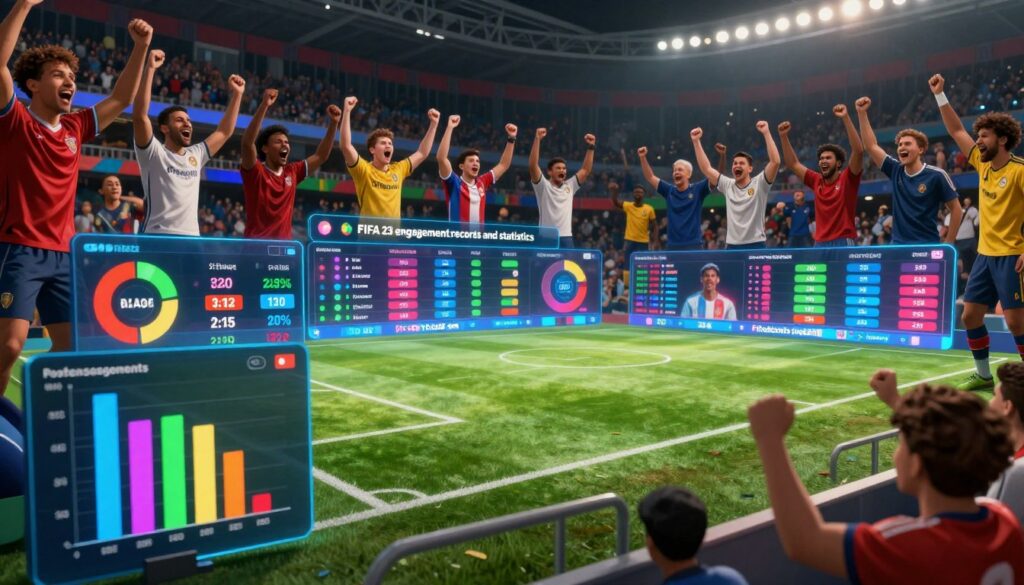
FIFA 23 engagement figures tell a clear story about the global community’s dedication.
Anúncios
By observing user behavior, we see that interest in the simulator remains steady throughout the product’s entire lifecycle.
These records and statistics reveal that the gaming experience goes far beyond simple competition. Player retention is driven by a combination of refined gameplay and frequent updates that keep interest constantly renewed.
Average time spent in matches
Many players dedicate a significant portion of their day to honing their skills on the virtual pitch. The average time spent in matches reflects a genuine commitment to tactical and technical improvement within the game.
This daily dedication is a key pillar supporting the high level of FIFA 23 engagement seen across platforms. Users strive to push their own limits, resulting in longer and more frequent gaming sessions.
Traffic spikes during seasonal events
Server traffic shows interesting fluctuations when new content is released. Specific seasonal events act as catalysts, generating spikes in activity that demonstrate fan loyalty to new content.
During these periods, the community rallies to earn exclusive rewards and test out new cards. We can identify several factors that explain this high-demand behavior:
- Release of special cards with boosted stats.
- Limited-time squad-building challenges.
- Themed tournaments that reward active participation.
- Content updates that shift the game’s meta.
The most frequently used players in online matches
Many competitors seek out the best FIFA 23 players to gain an edge in matches. The game’s dynamics create an environment where certain choices become almost mandatory for those aiming for consistent wins.
Consequently, observing the most common lineups offers insight into how the community adapts to the simulator’s mechanics.
Players with the highest selection rates
When analyzing the competitive landscape, we see names like Kylian Mbappé and Erling Haaland appearing with impressive frequency.
These players are chosen not only for their real-world status but for the efficiency they deliver on the virtual pitch, becoming fundamental pillars for most high-level squads.
When a player offers a balance of physical strength and finishing ability, they quickly become a favorite among the FIFA 23 player base. This standardization of lineups demonstrates how technical effectiveness dictates game trends.
The preference for pacey forwards
Speed is undoubtedly the attribute most valued by online players. Athletes capable of exploiting open space with agility hold a clear advantage over opposing defenses, shaping offensive tactics by prioritizing through-balls and rapid counter-attacks.
Many users adjust their formations specifically to accommodate forwards with high acceleration ratings. This relentless pursuit of speed largely defines the best FIFA 23 players in the current meta.
The ability to beat a defender in a split second is the key factor that separates winners from the rest of the competition.
The evolution of Icon and Hero cards in Ultimate Team
The introduction of special cards has completely transformed how we build our teams in Ultimate Team mode. These items brought past icons and great sporting heroes to the virtual pitch, raising the level of competition.
Squad-building dynamics have shifted drastically with these additions. Players now seek to balance the nostalgia associated with big names against the efficiency needed to win tough matches.
The market value of football legends
The Ultimate Team market directly reflects users’ desire to build unbeatable squads. Rare cards featuring football legends command high prices due to their scarcity and the impact they have on on-field performance.
Many players invest their virtual coins in these assets to secure a tactical advantage, keeping the game’s economic ecosystem active and constantly moving.
The impact of Hero cards on team chemistry
Icon and Hero cards play a crucial role in building chemistry between athletes, facilitating connections between players from different leagues and enabling more creative, varied formations.
Using these items adds new layers of strategy to the Ultimate Team market. The ability to integrate diverse talents without sacrificing collective cohesion is what sets the season’s best squads apart.
Goal and assist records in competitive modes
The game’s competitive modes hold the secrets to how the best players score so many goals.
The pursuit of victory demands a deep analysis of goal statistics, which have become a key differentiator for those aiming to climb to the highest divisions.
Therefore, understanding these figures is essential for anyone looking to improve their performance in online matches.
The most lethal goalscorers in Division Rivals
In Division Rivals, finishing efficiency separates amateurs from professionals. Top FIFA 23 players often use athletes with above-average finishing attributes to ensure that every created opportunity ends up in the back of the net.
The consistency of these goalscorers is what keeps competitors at the top of the leaderboard. Observing these players’ behavior reveals that they do not squander clear-cut chances; instead, they focus on intelligent positioning and precise finishing, avoiding desperate long-range shots.
This tactical discipline is what truly boosts goal statistics over the course of a competitive season.
Strategies that led to the highest assist numbers
Creating dangerous attacking plays requires more than just individual talent; it demands keen game vision. The most effective strategies involve rapid passing and exploiting spaces left by opposing defenders.
Many top FIFA 23 players employ high-pressing tactics to quickly regain possession and launch lethal counter-attacks.
Furthermore, the intelligent use of attacking full-backs has been a recurring tactic for increasing assist numbers.
By overloading the flanks, the player creates a numerical advantage, facilitating crosses or low passes into the center of the box—moves that are crucial for breaking down tight defenses and securing important victories.
Performance of European leagues in the simulator
Analyzing league performance in the simulator reveals which championships dominate user choices.
The way European FIFA leagues are represented directly impacts the experience of those seeking realism and competitiveness in every match.
The Premier League as the top choice
The English league has established itself as the clear favorite among players. Its popularity is no accident; the high concentration of talent and the fast pace of matches make the competition highly appealing.
Many users opt for English teams because it is easy to find player cards with high physical attributes—a factor that influences the game’s “meta” and keeps the Premier League consistently at the top of usage statistics.
Performance comparison among major leagues
When looking at league performance, we see that the balance between championships is key to the game’s diversity. Even though England leads the way, other European competitions offer valuable tactical options for those looking to step off the beaten path.
Below, we list the leagues most frequently selected for online matches:
- Premier League: High intensity, focus on speed and physical strength.
- La Liga: Technical balance and excellent passing quality.
- Bundesliga: Focus on rapid transitions and versatile players.
- Serie A: Solid defenses and a wide variety of special cards.
- Ligue 1: Preferred by those looking for agile attackers and dribblers.
Conclusion
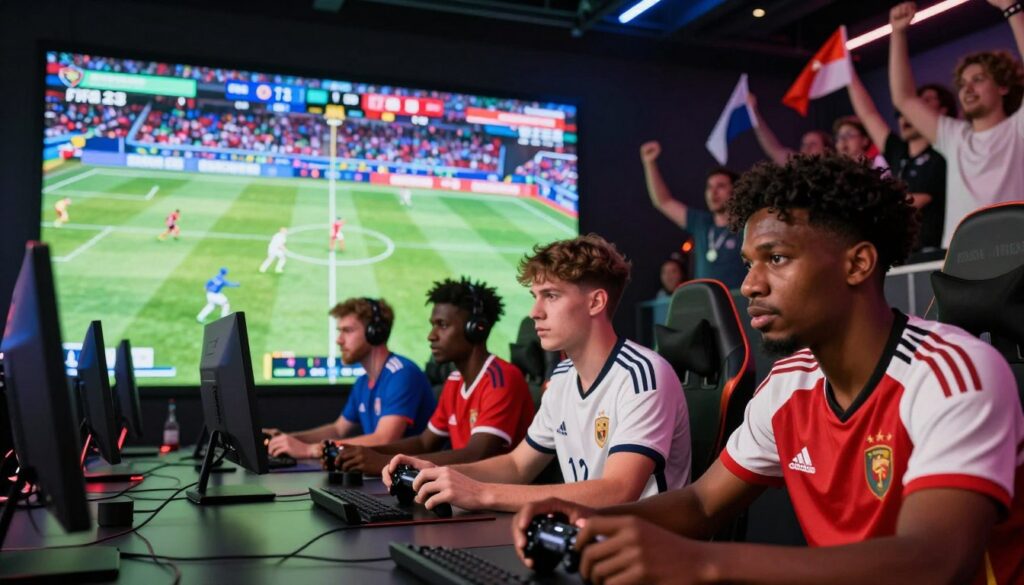
FIFA 23 cemented its place in the history of sports simulations by transforming complex data into an accessible experience for millions of players.
Every match played contributed to a vibrant ecosystem that shaped the behavior of the global community.
This iconic title leaves behind a technical and cultural legacy that serves as a foundation for the franchise’s future. The way users interacted with the Ultimate Team market and European leagues demonstrates the strength of this shared passion for digital football.